How Much Should I Tip Now That Every Payment Screen Asks for One?
The short answer is this: tip generously when someone is providing a personal service, but don't feel obligated to tip every time a payment screen suggests it. Tipping has become more confusing because technology has added tip requests to places where they never existed before. Understanding the difference between a true service and a simple transaction can help you make confident decisions without guilt.
For most households, tipping is no longer just about restaurants. Coffee shops, takeout counters, food delivery, ride shares, salons, hotel staff, movers, repair technicians, and even self-checkout kiosks sometimes ask for a gratuity. The result is that many people aren't asking whether they can afford to tip. They're asking what's actually appropriate.
Why tipping feels more confusing than it used to
For decades, tipping followed fairly predictable rules. You tipped your server, bartender, barber, taxi driver, or hotel staff because those jobs often depended on gratuities as part of their income.
Today, digital payment systems can display suggested tips almost anywhere. A cashier may simply turn a screen toward you with options for 20%, 25%, or even 30%, regardless of whether anyone provided a personal service.
That doesn't necessarily mean expectations have changed. In many cases, the software simply makes it easy for a business to ask.
That's why it's helpful to separate three different situations:
- Traditional tipped services where gratuities have long been expected.
- Personal service jobs where tipping is appreciated but may vary.
- Retail purchases where tipping has historically not been expected.
Once you recognize which category you're in, the decision becomes much easier.
When should you tip and how much is appropriate?
1. Full-service restaurants
If someone takes your order, serves your meal, checks on your table, and handles your dining experience, a tip remains the standard.
- Excellent service: 20% to 25%
- Good service: Around 20%
- Average service: 15% to 18%
- Poor service: Consider speaking with the manager before simply leaving no tip if the issue involved service rather than something outside the server's control.
If a restaurant automatically includes a service charge or gratuity, check your bill before adding another tip.
2. Coffee shops and counter service
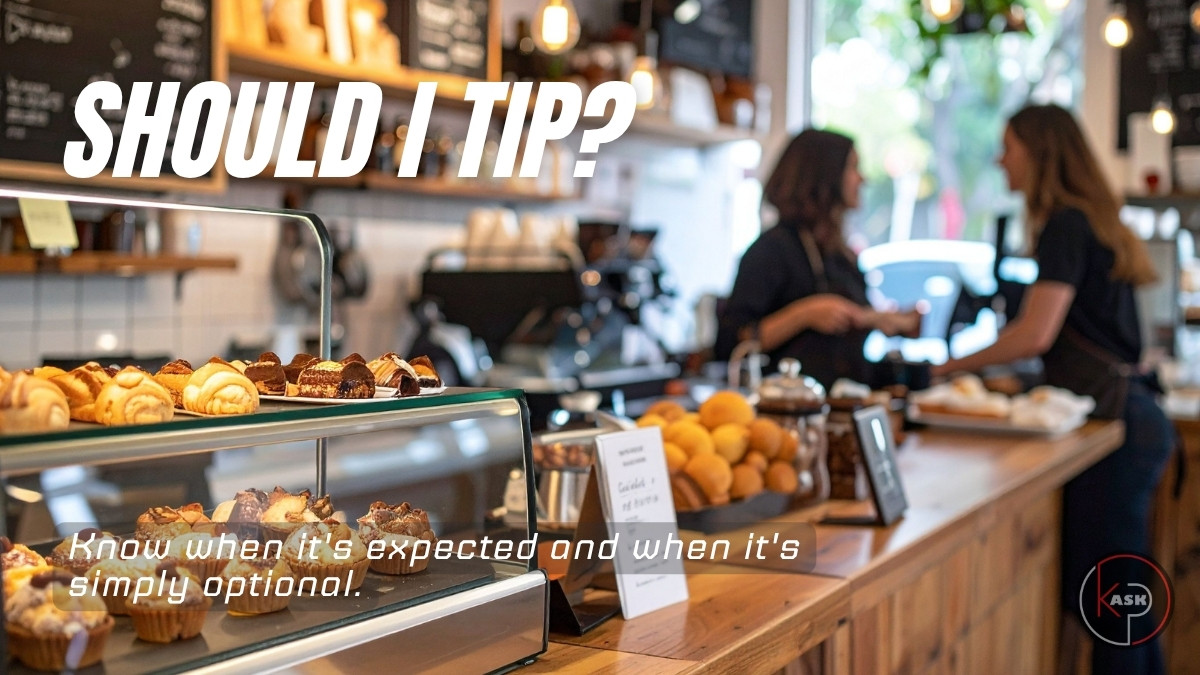
If you're ordering at a counter and carrying your own drink or food away, tipping is generally optional.
Many people choose to:
- Round up the total.
- Leave $1 or $2 for exceptional service.
- Skip the tip when the interaction is simply taking an order.
None of these choices are considered improper.
3. Food delivery
Delivery drivers use their own vehicles, spend time on the road, and often handle multiple deliveries in varying weather conditions.
A reasonable guideline is:
- About 15% to 20% of the order.
- More for long distances, difficult weather, or unusually large orders.
- A minimum dollar amount for small orders where a percentage would result in very little.
4. Ride share services
Tipping remains customary for good service.
Consider tipping more when the driver:
- Helps with luggage.
- Provides a particularly clean or comfortable ride.
- Safely handles difficult traffic or weather.
5. Hair salons and personal care
Haircuts, coloring, nail services, massages, and similar appointments generally continue to follow traditional tipping practices.
If someone spends significant time providing personal care, a gratuity is still widely expected.
6. Home service professionals
This category causes a lot of confusion.
If you've hired a licensed plumber, electrician, HVAC technician, or appliance repair company that charges professional rates, a tip is generally not expected.
However, you might choose to offer a tip when someone:
- Performs unusually difficult work.
- Responds during an emergency.
- Spends extra time solving a complicated problem.
- Provides exceptional customer service beyond the original job.
Even then, many homeowners choose instead to provide cold drinks, coffee, snacks, or a glowing online review.
7. Hotels
Hotel tipping remains fairly traditional.
- Housekeeping.
- Bell staff.
- Valet attendants.
- Concierge staff who provide meaningful assistance.
These remain situations where gratuities are commonly appreciated.
Why the payment screen shouldn't make the decision for you
The biggest mistake people make is assuming the payment screen knows what's expected. It doesn't.
The software is programmed by the business, not by a universal etiquette authority.
A suggested 25% tip doesn't automatically mean you should leave one. In many cases, those percentages are simply preset options that encourage larger gratuities.
Instead, ask yourself one simple question: Did someone provide personal service that made my experience noticeably better?
If the answer is yes, a tip is often appropriate. If the answer is no, you shouldn't feel pressured simply because a screen asked.
How tipping affects small businesses
If you own a small business, tipping technology presents its own challenge.
Adding a tip option may increase revenue for employees, but it can also make some customers uncomfortable if they feel pressured.
Businesses that communicate clearly tend to build more trust. Customers appreciate knowing whether tips go directly to employees, are shared among staff, or are entirely optional.
Transparency often creates more goodwill than simply asking for the highest possible gratuity.
Here's how I look at tipping
I try to separate appreciation from obligation.
When someone genuinely makes my day easier, solves a problem, or provides thoughtful personal service, I'm happy to recognize that effort with a tip.
But I don't believe every payment terminal should become a moral test.
Technology has made asking for tips incredibly easy. That doesn't mean every request deserves the same response.
I think most people want to be generous. What they don't want is to feel manipulated into paying more simply because they're worried about being judged.
A thoughtful tip given freely means far more than one given under pressure.
One simple rule to make tipping less stressful
The next time a payment screen asks for a gratuity, pause for a moment before tapping a button.
Ask yourself whether someone provided a meaningful personal service or whether you're simply completing a purchase.
That one question removes most of the uncertainty and helps you make a decision you can feel good about, whether you choose to tip generously, leave a small amount, or decline altogether.
Have a question that's been on your mind? Send it to Ask KP, and your question could become a future Daily Answer.