Should I Let My Kid Use ChatGPT?
Kids + AI: The Real Conversation Parents Are Having Right Now
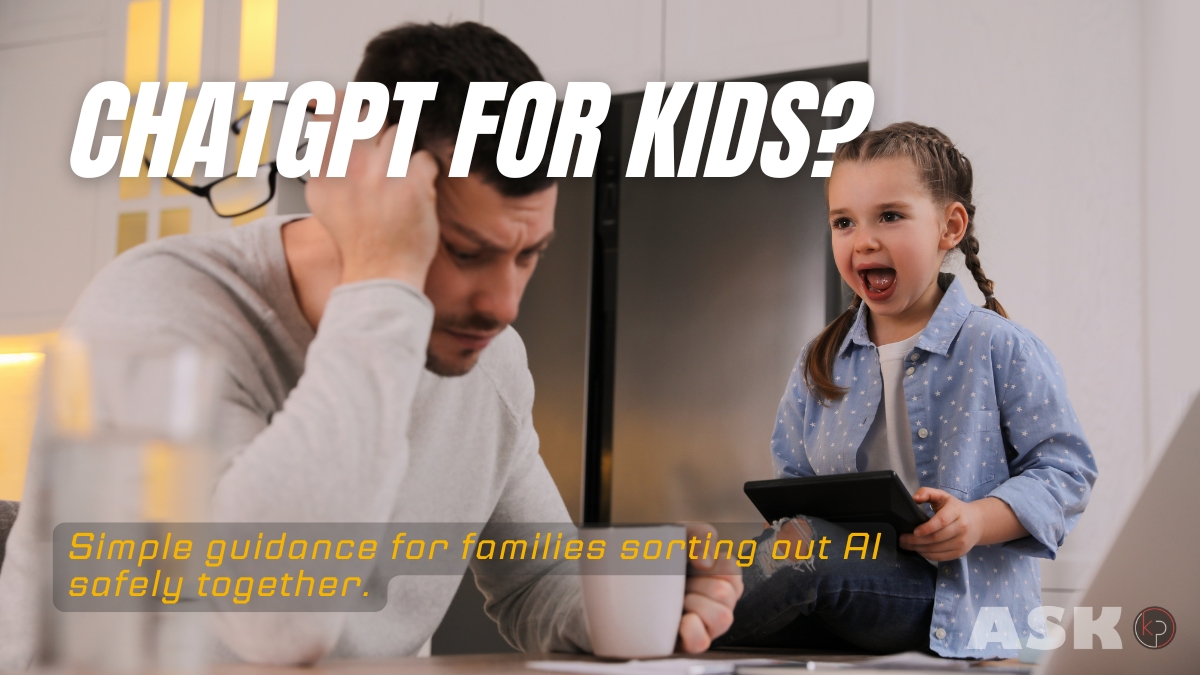
If your kid is curious about AI, you're not alone - this question hits my inbox every week. And honestly, good for them. Curiosity is a superpower. But you're also right to pause before giving the green light, because AI isn't a toy. It's like handing your kid a power tool: useful, amazing ... and absolutely something that needs guidance.
Let's break down what matters, what to look out for, and what smart parents are doing right now.
AI Is Everywhere - And Kids Are Running Into It Whether We Approve or Not
Your child is going to see AI at school, in homework, in games, and eventually in whatever job they have - whether that's robotics, real estate, or redesigning the weather app because kids today expect perfection.
So giving them guardrails now isn't overreacting. It's being the adult in the room.
And when parents know the what, the why, and the "okay, here's how we handle this," everything gets a whole lot less stressful.
What Parents Should Actually Watch For (Without Overthinking It)
AI Can Sound Confident ... and Still Be Totally Wrong
Kids trust tech way more than adults do. That means they might accept whatever the AI says as 100% accurate - even when it's not.
Red flags to watch:
-
Your child treating AI like a teacher instead of a tool
-
Answers that sound right but aren't
-
Homework completed too fast and too perfectly
The move: Teach them the golden rule - "Trust, but double-check."
Privacy Matters, Even If Kids Think It Doesn't
Kids have no filter. They'll tell an AI their whole life story if you let them.
Keep them away from:
-
Sharing names
-
Sharing locations
-
Uploading personal photos
-
Talking about family issues
A simple rule works wonders: "If you wouldn't say it on speakerphone in a crowded line at Target, don't type it into AI."
The Internet Has ... Interesting People. AI Isn't One of Them.
Some AI tools try to mimic emotions, personalities, or relationships. And kids? They bond fast.
This can lead to:
-
Thinking the AI is an actual friend
-
Believing the AI has opinions
-
Spending way too much time chatting with it for comfort
Your kid needs to know: AI doesn't have feelings, and it's not a person. It's a calculator with charisma.
Parents Ask This One All the Time: "Are There Kid-Safe AI Options?"
Yes - there are options that offer more guardrails than general AI models.
These include:
-
ChatGPT with parental controls
-
Tools designed for education, not random conversation
-
Limited-use school platforms your district may already use
The question isn't just "Which tool?" It's "Which tool + which boundaries?"
Because even the safest option can go sideways if there aren't expectations around it.
Here's the Move I'd Make If I Were You
I'd sit down with your kid and set three rules - clear, simple, no drama:
-
AI is a helper, not a teacher. Check real sources.
-
No personal info. The AI doesn't need your life story.
-
You can use AI for ideas, not for turning in finished homework.
Then I'd pick the tool that fits your comfort level.
If ChatGPT feels too wide open, go with a school-approved platform or a kid-centered AI service.
And keep the door open - literally. If they're using AI, it shouldn't happen behind a closed one.
You don't need a PhD to guide them. You just need to stay one step ahead and talk about it like it’s normal ... because it is.
The One Thing Smart Parents Do Before Their Kid Hits "Start"
They make a plan with their kid, not for their kid. That's what builds trust - and keeps everyone sane.
If you want help shaping those rules, choosing the right AI option, or figuring out how this fits with your child's schoolwork, I'm here to help you sort it out in a simple, judgment-free way.
This is exactly the kind of one-on-one problem I help families navigate through Ask KP Consulting - practical strategy, real-world results, no tech jargon.
Just say the word if you want a hand.